Home / Industries / Travel and Tourism

Travel and tourism marketing strategies

A playbook for tour operators, stays and destination businesses that need inspiration, planning support and confident bookings.

Travel and tourism marketing overview

Travel is bought with emotion and checked with logic. Travellers dream through photos and stories, then compare prices, reviews, safety and flexibility before they book. Marketing must inspire first and reassure second.

Challenges include strong seasonality, price comparison sites, last-minute changes and the need to deliver on photographic promises. Honest descriptions protect reviews.

Travel and tourism marketing overview

The complete travel and tourism marketing playbook for hotels, homestays and tour operators

Travellers dream on Instagram, research on Google and YouTube, compare on booking platforms and decide after reading reviews. For Indian hotels, resorts, homestays and tour operators, the challenge is to be visible at every step without handing 15 to 25 percent of every booking to online travel agencies. This playbook shows how to balance OTA visibility with direct bookings and repeat guests.
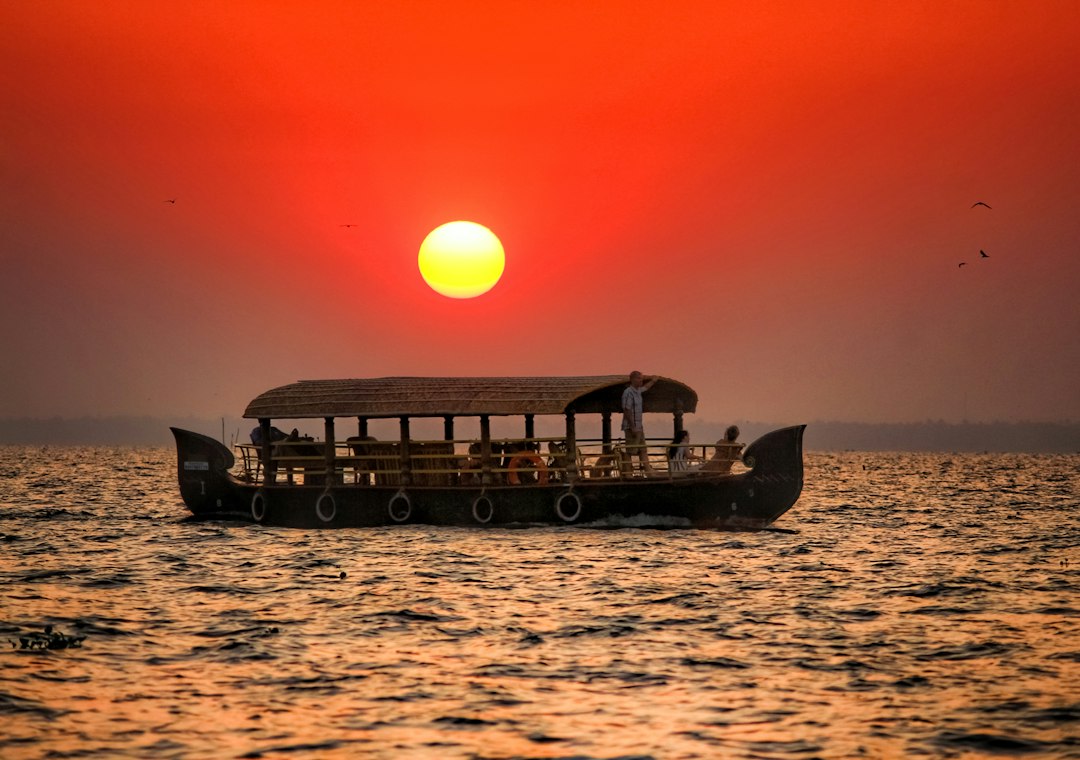
Sunset over the Kerala backwaters, a popular Indian travel destination

Who this playbook is for

Hotels and resorts, homestays and villas listed on Airbnb, adventure and trekking operators, travel agencies selling packages, pilgrimage and destination wedding planners, and tourism boards or attractions. A hill-station homestay sells experience and hospitality, a city business hotel sells location and convenience, and a tour operator sells safety, planning and memories.

Step 1: Get the listings and website right

  • OTA profiles: on MakeMyTrip, Booking.com, Agoda, Goibibo and Airbnb, upload 25 or more high-quality photos per room type, write honest descriptions, keep rates and availability in sync and reply to every review.
  • Google Business Profile and Hotel listings: accurate amenities, check-in times, photos and a link to direct booking so travellers can book without an OTA.
  • A booking-ready website: room pages, rates, an instant booking engine or WhatsApp booking, a best-rate-direct message and clear cancellation policies.

Step 2: Destination content that ranks

People search for things to do in a place, the best time to visit, how to reach, itineraries and budget trips. Write helpful destination guides for the area around your property, such as a three-day itinerary, local food spots or monsoon travel tips, and link them to your rooms or packages. These pages attract travellers months before they book and keep ranking every season.

Step 3: Visual social media

Travel is visual. Post sunrise views, room tours, local experiences, guest stories with permission and behind-the-scenes hospitality as Reels and Shorts. Partner with travel creators whose audience matches your guests, give them a real experience and ask for honest content with disclosure. Use location tags and destination hashtags so travellers discover you while planning.

Step 4: Direct bookings and repeat guests

Offer a small benefit for booking direct, such as free breakfast, early check-in or a local experience. Collect guest contacts with consent and send seasonal offers, festival packages and anniversary reminders. Repeat and referred guests are the most profitable bookings you can get.

Step 5: Plan around seasons

Indian tourism is highly seasonal. Promote hill stations before summer holidays, beaches and deserts for winter, monsoon getaways for nearby city audiences and festive long weekends well in advance. In the off-season, target workcations, corporate offsites and local staycations.
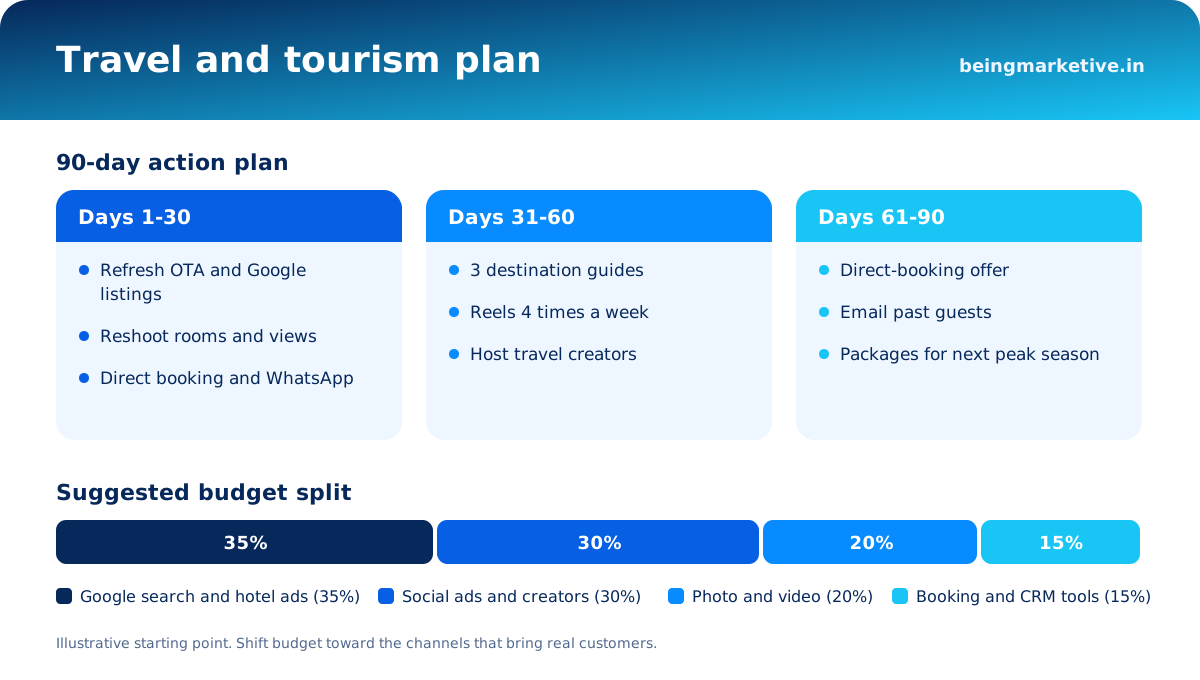
Travel and tourism marketing 90-day plan and budget split for hotels, homestays and tour operators

A realistic 90-day plan

  • Days 1 to 30: refresh OTA and Google listings, reshoot photos, set up direct booking and WhatsApp, and start review replies.
  • Days 31 to 60: publish three destination guides, post reels four times a week, host one or two creators and launch search ads on your property and destination name.
  • Days 61 to 90: launch a direct-booking offer, email past guests, build packages for the next peak season and measure the share of direct bookings.

Budget guidance

Independent properties often keep total marketing and OTA commission costs between 10 and 20 percent of room revenue. Within your own digital budget, start with around 35 percent on Google search and hotel ads, 30 percent on social ads and creators, 20 percent on photography and video and 15 percent on booking engine, CRM and messaging tools. Track direct booking share and revenue per available room.

Related playbooks and services

See the restaurant playbook for your in-house dining, our social media marketing guide for reels and creators, and the SEO strategy guide for destination content.

Target audience and customer journey

Different travellers plan in different ways.

Families

Prioritise safety, comfort and clear itineraries.

Independent explorers

Seek authentic experiences and flexible plans.

Groups and corporates

Need organised logistics and clear pricing.

Industry-specific SEO opportunities

Planning searches begin long before booking.

Destination guides

Detailed, original guides on when to go, how to get there and what to see.

Itinerary pages

Sample itineraries by duration and travel style.

Review content

Genuine traveller feedback and answers to practical questions.

Content and social media strategy

Use photos and short videos of real experiences, plus planning tips that help travellers decide. Itinerary carousels and packing lists are practical and shareable.

Be careful with images: show the actual stay or route and avoid misleading edits.

Paid advertising opportunities

Demand is seasonal, so match budgets to booking windows.

Search ads

Capture destination and package searches ahead of peak seasons.

Video ads

Show the experience and link to an itinerary page.

Remarketing

Follow up with people who viewed prices or itineraries.

Click-to-WhatsApp

Start personalised trip conversations.

Lead generation and conversion strategy

Offer a custom itinerary request, a downloadable packing list or a WhatsApp consultation. Respond with clear inclusions, exclusions, cancellation terms and payment steps.

Make flexibility and safety visible; they reduce hesitation more than discounts.

Lead generation and conversion strategy

Suggested marketing funnel

A funnel from dreaming to travelling.

01

Inspire

Photos, reels and guides spark ideas.

02

Plan

Itineraries, costs and seasonal tips answer questions.

03

Enquire

A form or chat request starts a custom plan.

04

Book

Clear terms and secure payment.

05

Share

Post-trip review request and referral invitation.

Practical campaign examples (illustrative)

These are hypothetical teaching examples. They are not real client campaigns and do not show real results.

Illustrative: monsoon itineraries

A tour operator publishes seasonal itineraries and links each to an enquiry form.

Illustrative: stay walkthrough

A guesthouse shares an honest room tour and local tips.

Illustrative: traveller stories

A trip organiser features a guest's journey, with written consent.

KPIs and measurement guidance

Measure season by season.

Enquiry to booking rate

Enquiries that become confirmed trips.

Revenue per booking

Average value by package type.

Review score

Average rating and new reviews per season.

Common marketing mistakes

Do this instead

Avoid these mistakes

Travel and Tourism marketing FAQs

Offer a clear benefit for booking direct, make your website booking engine fast and mobile friendly, link it from Google and Instagram, and stay in touch with past guests. Keep OTA listings strong because many guests check OTAs first and then book direct.

They can be, if the creator audience matches your guests. Choose creators by engagement and audience location rather than follower count, agree on deliverables in writing and track bookings with a unique code or link.

Target nearby city audiences for weekend staycations, workcations with good Wi-Fi, small group retreats and long-stay discounts. Promote local off-season experiences such as monsoon walks or festivals.

Very important. Travellers compare ratings and recent reviews across Google and OTAs before booking. Ask every happy guest to review, reply to all reviews and fix recurring complaints quickly.

Begin planning content and ads several weeks before travellers usually book, then increase spend as the window opens.

Offer specialist knowledge, personal service and clear value that they cannot copy, and build your own guest list.

Visual platforms and search work well together. Use social for inspiration and search for planning intent.

A clear website builds trust and gives you control over bookings, though some operators begin with social and WhatsApp.

Related articles, services and resources

Social media marketing

Itinerary and reel ideas.

Restaurants playbook

Hospitality cross-learning.

Explore more marketing playbooks

See how other industries approach the same strategies, then pick one improvement to apply this week.