A restaurant can serve the best biryani in the city and still sit half empty on a Tuesday. In Indian food businesses, footfall and orders depend on three things more than anything else: how you appear on Google Maps and Zomato or Swiggy, what people see when they look at your photos and reels, and whether guests come back a second and third time. This playbook gives you a weekly routine to improve all three.
Who this playbook is for
Dine-in restaurants, cafes, bakeries and dessert shops, quick-service outlets, cloud kitchens that sell only through delivery apps, and caterers. A cafe competes on vibe and Instagram appeal, a cloud kitchen competes on ratings, delivery time and menu photos, and a family restaurant competes on reviews, parking and value.
Step 1: Own your local listings
- Google Business Profile: correct category such as South Indian restaurant rather than just Restaurant, accurate hours including late-night timings, a menu link, booking and order links, and fresh photos every week.
- Aggregator profiles: on Zomato and Swiggy, use bright, appetising dish photos, short descriptions, clear veg and non-veg markers and combo options. Your rating and delivery time affect ranking, so treat every complaint as urgent.
- Consistent details: the same name, address and phone number everywhere, including Instagram, Justdial and your website.
Step 2: Reviews as a daily habit
Diners read the latest reviews, not the oldest. Place a QR code for Google reviews on tables and bills, ask happy guests in person, and reply to every review within a day. For negative reviews, apologise, explain what you have fixed and invite the guest back. Never buy reviews or offer free food only in exchange for five stars; platforms detect and penalise this.
Step 3: Content that makes people hungry
Short vertical videos perform best: the tandoor being fired, cheese pulls, chai being poured, the chef plating a signature dish. Post three to five reels a week, show real customers with permission, and promote daily specials in stories. Collaborate with local food bloggers for honest reviews, and always ask them to disclose paid partnerships.
Step 4: Bring guests back
Collect phone numbers with consent through a WhatsApp opt-in or loyalty card. Send birthday and anniversary offers, new menu launches and festival specials. Direct ordering through your own WhatsApp or website saves aggregator commissions of 18 to 30 percent, so give regulars a small reason to order direct.
A realistic 90-day plan
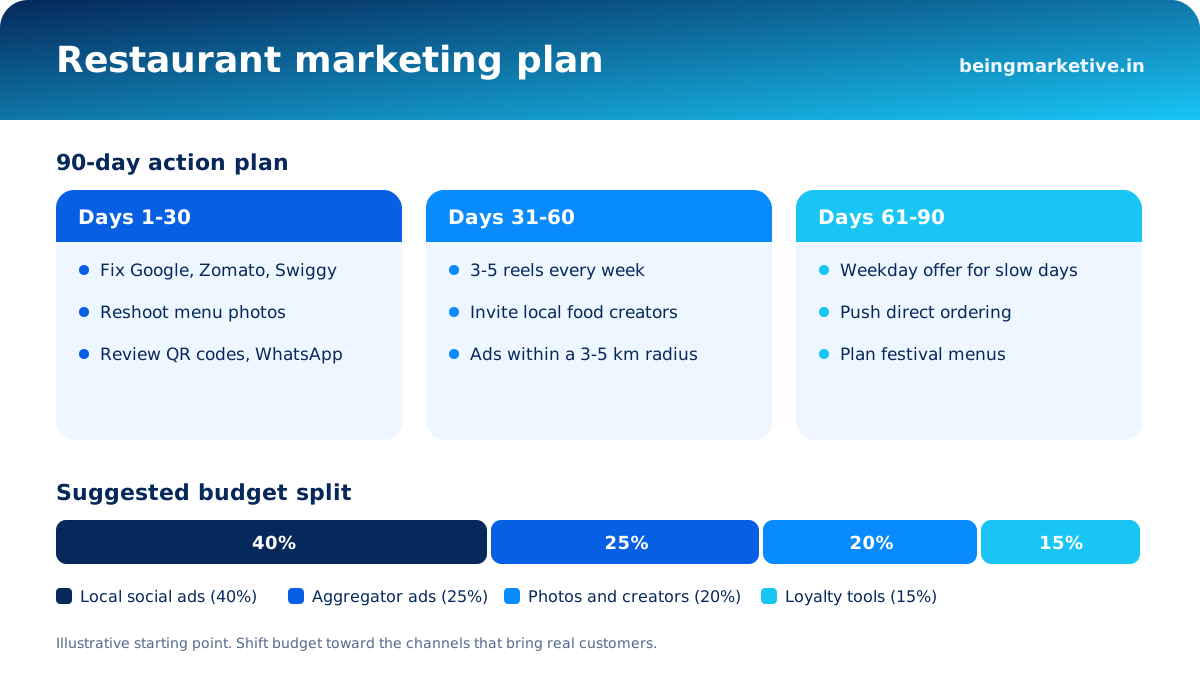
- Days 1 to 30: fix Google and aggregator profiles, reshoot menu photos, add review QR codes and set up a WhatsApp business account.
- Days 31 to 60: post reels consistently, invite two or three local creators, launch a small Instagram ad campaign within a 3 to 5 km radius and start a loyalty offer.
- Days 61 to 90: study which dishes and posts perform, run a weekday offer for slow days, push direct ordering to repeat customers and plan festival menus.
Budget guidance
Many independent restaurants spend 3 to 6 percent of revenue on marketing. Start with roughly 40 percent on local Instagram and Facebook ads, 25 percent on aggregator ads and offers, 20 percent on photography and creator collaborations and 15 percent on loyalty and WhatsApp tools. Track covers, direct orders and repeat visits rather than likes.
Related playbooks and services
Use our social media marketing guide for reels and creators, the SEO strategy guide for local Google Maps rankings and the travel and tourism playbook if you run a resort or hotel restaurant.