Travellers dream on Instagram, research on Google and YouTube, compare on booking platforms and decide after reading reviews. For Indian hotels, resorts, homestays and tour operators, the challenge is to be visible at every step without handing 15 to 25 percent of every booking to online travel agencies. This playbook shows how to balance OTA visibility with direct bookings and repeat guests.
Who this playbook is for
Hotels and resorts, homestays and villas listed on Airbnb, adventure and trekking operators, travel agencies selling packages, pilgrimage and destination wedding planners, and tourism boards or attractions. A hill-station homestay sells experience and hospitality, a city business hotel sells location and convenience, and a tour operator sells safety, planning and memories.
Step 1: Get the listings and website right
- OTA profiles: on MakeMyTrip, Booking.com, Agoda, Goibibo and Airbnb, upload 25 or more high-quality photos per room type, write honest descriptions, keep rates and availability in sync and reply to every review.
- Google Business Profile and Hotel listings: accurate amenities, check-in times, photos and a link to direct booking so travellers can book without an OTA.
- A booking-ready website: room pages, rates, an instant booking engine or WhatsApp booking, a best-rate-direct message and clear cancellation policies.
Step 2: Destination content that ranks
People search for things to do in a place, the best time to visit, how to reach, itineraries and budget trips. Write helpful destination guides for the area around your property, such as a three-day itinerary, local food spots or monsoon travel tips, and link them to your rooms or packages. These pages attract travellers months before they book and keep ranking every season.
Step 3: Visual social media
Travel is visual. Post sunrise views, room tours, local experiences, guest stories with permission and behind-the-scenes hospitality as Reels and Shorts. Partner with travel creators whose audience matches your guests, give them a real experience and ask for honest content with disclosure. Use location tags and destination hashtags so travellers discover you while planning.
Step 4: Direct bookings and repeat guests
Offer a small benefit for booking direct, such as free breakfast, early check-in or a local experience. Collect guest contacts with consent and send seasonal offers, festival packages and anniversary reminders. Repeat and referred guests are the most profitable bookings you can get.
Step 5: Plan around seasons
Indian tourism is highly seasonal. Promote hill stations before summer holidays, beaches and deserts for winter, monsoon getaways for nearby city audiences and festive long weekends well in advance. In the off-season, target workcations, corporate offsites and local staycations.
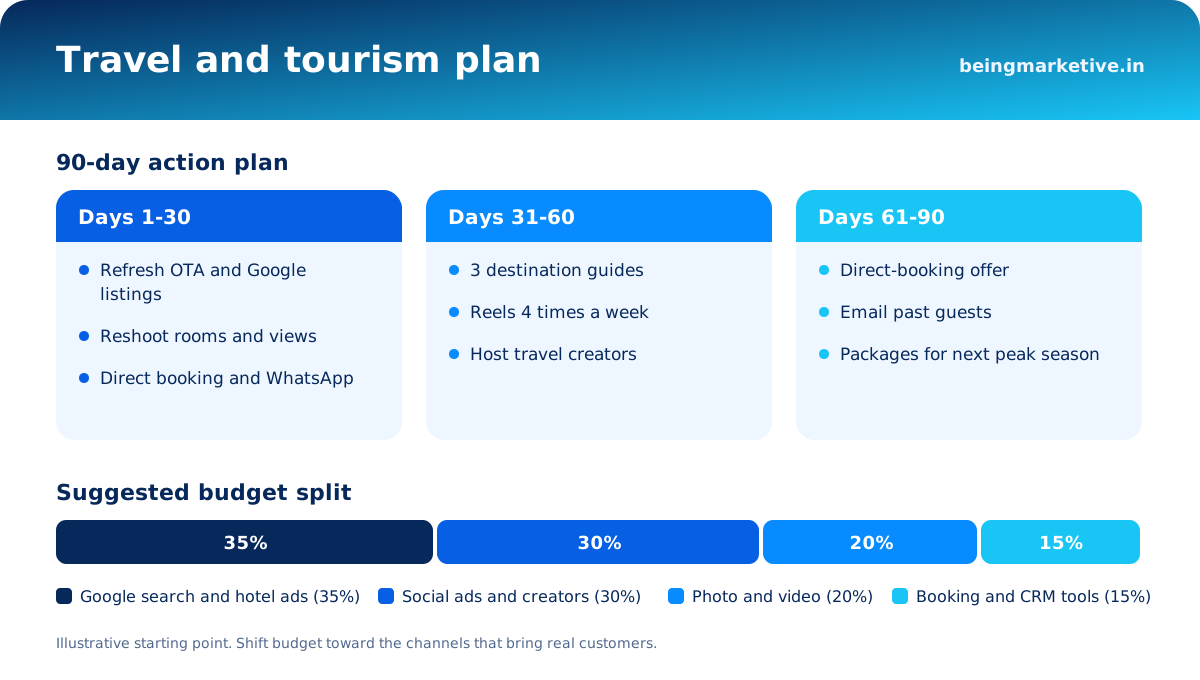
A realistic 90-day plan
- Days 1 to 30: refresh OTA and Google listings, reshoot photos, set up direct booking and WhatsApp, and start review replies.
- Days 31 to 60: publish three destination guides, post reels four times a week, host one or two creators and launch search ads on your property and destination name.
- Days 61 to 90: launch a direct-booking offer, email past guests, build packages for the next peak season and measure the share of direct bookings.
Budget guidance
Independent properties often keep total marketing and OTA commission costs between 10 and 20 percent of room revenue. Within your own digital budget, start with around 35 percent on Google search and hotel ads, 30 percent on social ads and creators, 20 percent on photography and video and 15 percent on booking engine, CRM and messaging tools. Track direct booking share and revenue per available room.
Related playbooks and services
See the restaurant playbook for your in-house dining, our social media marketing guide for reels and creators, and the SEO strategy guide for destination content.