Fitness businesses face a familiar pattern: a rush of sign-ups in January and before weddings or summer, then members quietly stop coming by the third month. The gyms and studios that grow in India do two things well. They make it easy and low-risk to start, and they build a community that keeps people showing up. This playbook covers both acquisition and retention.

Who this playbook is for
Neighbourhood gyms and premium fitness clubs, yoga and pilates studios, CrossFit and functional training boxes, dance and Zumba studios, online fitness and nutrition coaches, and wellness centres offering massage, Ayurveda or physiotherapy. Studios sell community and guidance, gyms sell convenience and equipment, and online coaches sell personal accountability.
Step 1: Make starting easy
- Clear offer: a free trial class, a one-week pass or a low-cost first month. Spell out exactly what is included and what happens after.
- Transparent pricing: show membership options or a starting price. Many people in India hesitate to visit a gym only to ask about fees.
- Google Business Profile: real photos of equipment, classes and changing rooms, timings for men and women batches where relevant, trainer names and reviews.
- Booking in two taps: WhatsApp booking or an online schedule for trial classes.
Step 2: Content that motivates, not just sells
Short workout tips, form corrections, healthy Indian meal ideas, member journeys shared with permission and trainer introductions work well on Instagram and YouTube. Avoid unrealistic transformation claims and before-and-after pictures that imply guaranteed results; they damage trust and can break platform rules. Consistent helpful content makes people feel they already know your trainers before they walk in.
Step 3: Local campaigns around life moments
Plan campaigns around New Year resolutions, wedding season, summer, festivals and back-to-work months. Use Meta ads targeted within 3 to 5 km, Google Search ads for gym near me or yoga classes in a locality, and partnerships with nearby offices, housing societies and cafes for corporate or community offers.
Step 4: Retention and community
Retention decides profitability. Welcome every new member personally, set a first goal, check in after week one and week three, and celebrate milestones. Challenges, group classes, leaderboards and member events turn a gym into a community. Contact members who have not visited for ten days before they cancel.
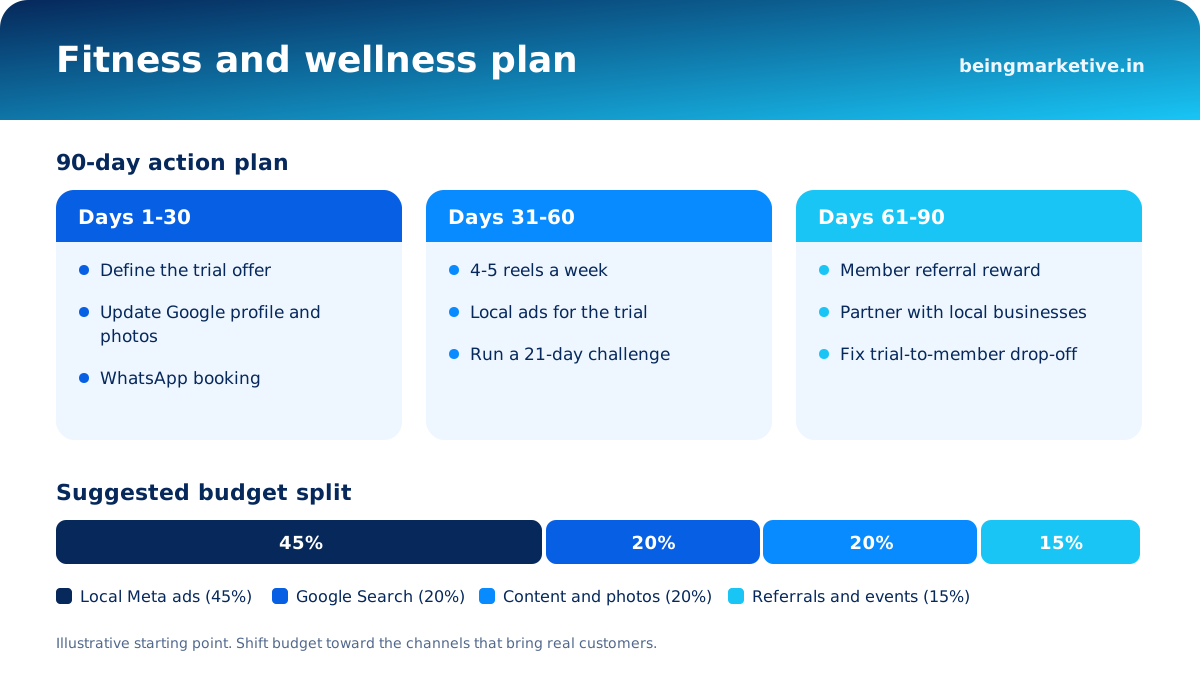
A realistic 90-day plan
- Days 1 to 30: define the trial offer, update Google profile and photos, set up WhatsApp booking and a simple member tracking sheet or software.
- Days 31 to 60: post four to five reels a week, launch local ads for the trial offer, run a 21-day challenge and introduce trainers on social media.
- Days 61 to 90: start a referral reward for members, partner with two local businesses, measure trial-to-member conversion and fix the biggest drop-off.
Budget guidance
Independent gyms and studios often spend 5 to 10 percent of revenue on marketing. A practical split is around 45 percent on local Meta ads, 20 percent on Google Search, 20 percent on content and photography, and 15 percent on referral rewards and community events. Track cost per trial, trial-to-member rate and monthly retention.
Related playbooks and services
See the healthcare playbook if you offer physiotherapy or clinical wellness, the social media marketing guide for reels, and the lead generation guide to convert more trial enquiries.