
In professional services, clients are not buying a product. They are buying confidence that you understand their problem and will handle it well. That is why most work still comes from referrals. Digital marketing does not replace referrals; it multiplies them by making sure that when someone hears your name, they find a credible website, clear expertise and an easy way to start a conversation. This playbook helps firms build that authority steadily.

Who this playbook is for
Chartered accountants and tax consultants, company secretaries, lawyers and law firms, management and HR consultants, architects and interior designers, IT and digital agencies, and freelancers selling expertise. Some professions, including advocates in India, face strict limits on advertising and solicitation, so always check the rules of your professional body before promoting your services.
Step 1: A website that shows expertise
- Service pages by problem: GST registration and filing for startups, trademark registration, company incorporation, NRI tax filing. Each page explains who it is for, the process, documents needed, timelines and typical fee range where allowed.
- Team and credentials: qualifications, membership numbers where relevant, years of experience, areas of focus and photos. People hire people.
- Proof: client logos, testimonials and short case summaries shared with permission and within professional rules.
- Easy first step: a consultation booking link, WhatsApp button and short enquiry form.
Step 2: Authority content
Answer the questions clients ask every week. Explain new tax deadlines, rule changes, compliance checklists and common mistakes in plain language. Publish articles on your website, summarise them on LinkedIn and send a monthly email to clients and contacts. Content that is timely and accurate positions you as the expert people remember when they need help, and it ranks for many specific searches.
Step 3: LinkedIn and referral partnerships
LinkedIn is the main platform for professional services. Post two or three times a week with insights from real work, without sharing confidential details. Build referral relationships with complementary professionals: a CA with a lawyer, an architect with interior contractors, an agency with web developers. Thank and update referrers every time they send work.
Step 4: Local visibility
Many clients still search for a CA near me or a property lawyer in their city. Keep your Google Business Profile complete with services, office hours and photos, ask satisfied clients for reviews where permitted and list yourself in reputable professional directories.
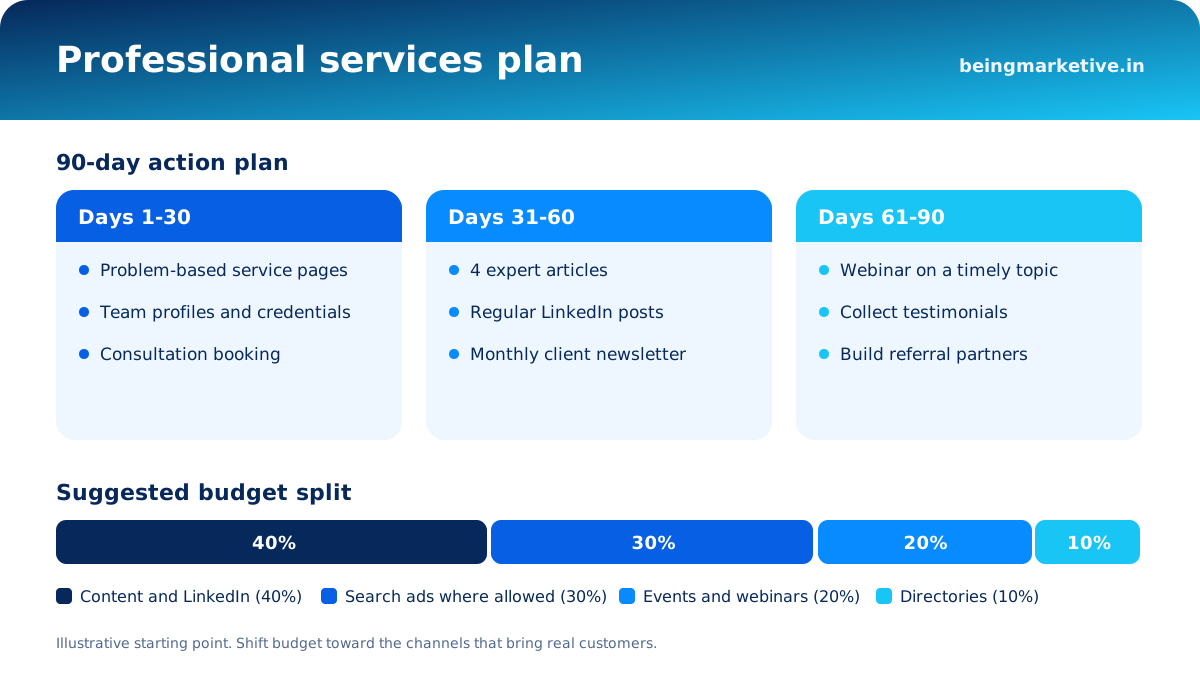
A realistic 90-day plan
- Days 1 to 30: rewrite service pages around client problems, update team profiles and credentials, set up consultation booking and Google profile.
- Days 31 to 60: publish four expert articles, post on LinkedIn regularly, start a monthly client newsletter and reach out to five potential referral partners.
- Days 61 to 90: host a webinar or workshop on a timely topic, collect testimonials, track which services bring the most enquiries and create more content around them.
Budget guidance
Small firms often spend 2 to 5 percent of revenue on marketing. Most of the value comes from time rather than ad spend: writing, speaking and networking. Where ads are permitted, small Google Search campaigns for specific services such as GST registration in a city and LinkedIn promotion of webinars work well. Track enquiries by source and the revenue they produce.
Related playbooks and services
Read the lead generation guide, the SEO strategy guide for service pages and the IT Product playbook if your firm sells a productised service or software.